
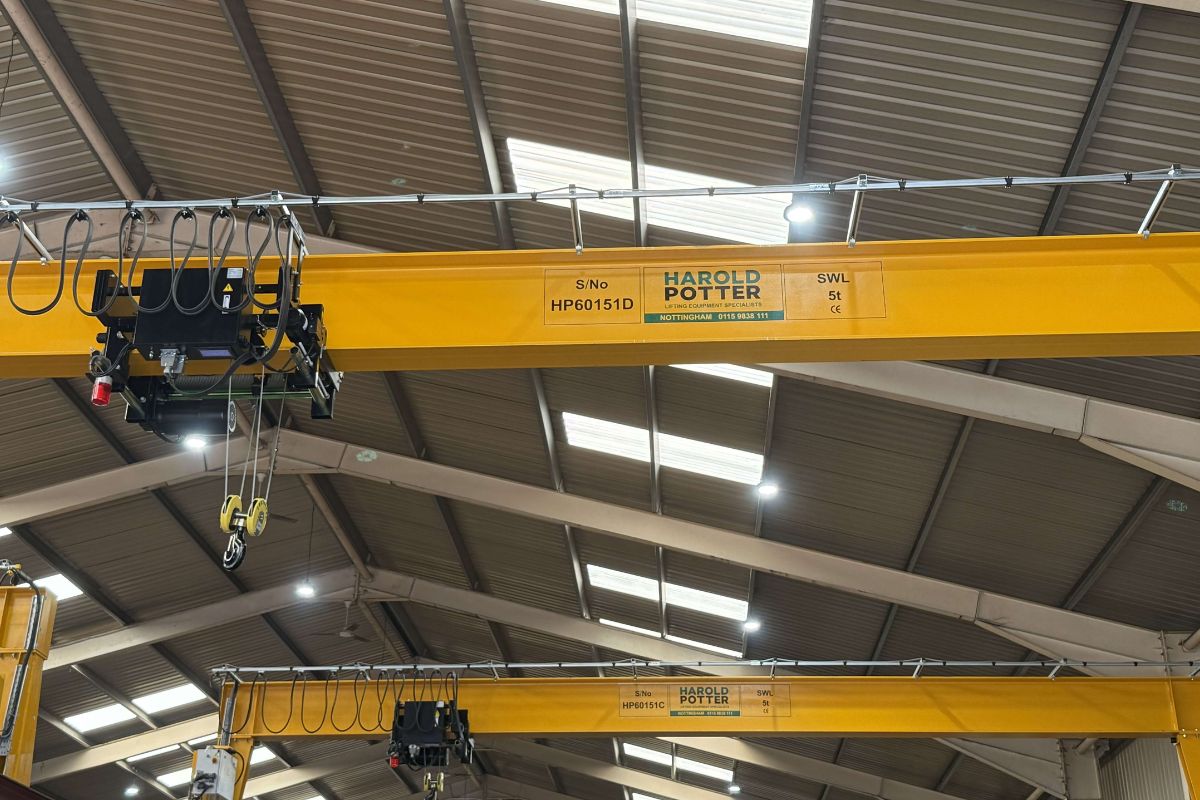
One of the first questions businesses ask when considering a new overhead crane is, “How much will it cost?”
The honest answer is that there isn’t a fixed price. Every overhead crane is designed around the building it will operate in, and the lifting requirements of the business, meaning no two projects are the same.
However, we also understand that when you’re planning a project or preparing a budget, you need a realistic figure to work from. That’s why we’ve created this guide.
As a general guide, a standard 5 tonne overhead crane with a 13.5 metre span and 4.5 metre lifting height would typically cost around £55,000. Depending on your exact specification and site requirements, the final price could vary by approximately by +/-10%, but this provides a reliable starting point for budgeting.
Throughout this guide, we’ll explain what contributes to that cost and why some cranes are more expensive than others. Factors such as the crane’s span, the type of runway system it operates on, installation requirements and site conditions all influence the final price.
Span
Span has one of the biggest influences on the overall cost of an overhead crane. As the span increases, the crane bridge must be manufactured from larger and stronger steel sections to safely support both its own weight and the load it is lifting. This means more material is required, along with additional fabrication, machining and manufacturing time.
For example, a 5-tonne overhead crane with a 13.5 metre span, like our example, will generally cost less than an equivalent crane with a 20 metre span because considerably more steel is needed to achieve the greater width while maintaining the required strength and rigidity.
Longer spans can also increase transport and installation costs, particularly where larger components or specialist lifting equipment are required on site.
Lifting Height
The lifting height is the maximum distance the hook can safely travel vertically, from its lowest position to its highest.
In many cases, increasing the lifting height has a smaller impact on price than increasing the crane’s span, but it is still an important consideration. A greater lifting height typically requires a longer wire rope or chain, a different hoist configuration and, in some applications, additional engineering to ensure the crane operates safely and efficiently.
Choosing the correct lifting height is important. Specifying more lift than you actually need can increase the project cost unnecessarily, while insufficient lifting height may prevent the crane from carrying out its intended task effectively. Selecting a lifting height that matches your application helps ensure you achieve the best balance between performance and cost.
Gantry Steelwork
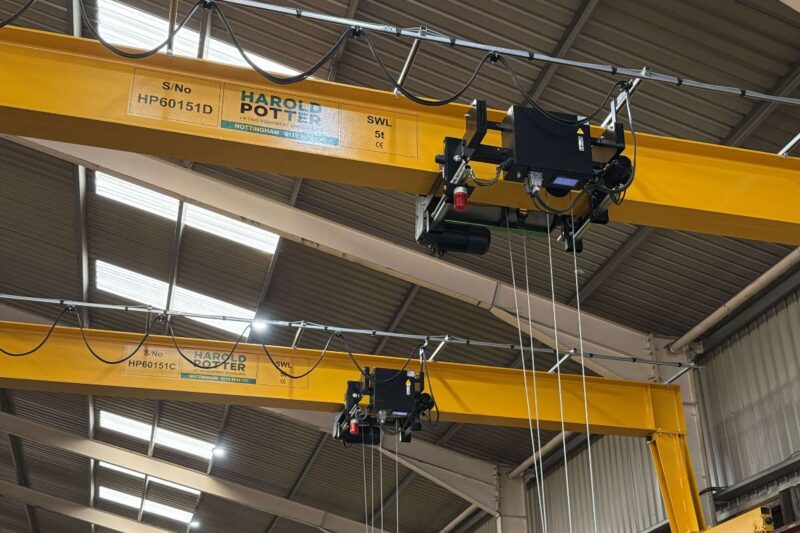
Gantry steelwork is a major factor in the overall cost of a crane. For example, if a crane requires an 18 metre long gantry with four upright legs on each side, spaced 6-metres apart, a significant amount of structural steel is needed. The additional material increases both the weight and the overall cost of the crane. It’s essential to provide stability for the crane so that it can safely bare the load of the crane and what is lifted.
On the other hand, a crane installed on an extension attached to an existing building is often more cost-effective than a free-standing gantry, as less supporting steelwork is required. However, if your premises are rented rather than owned, modifying the building may not be possible without the landlord’s approval, making a free-standing structure the more practical solution despite the higher cost.
Duty Classification
A crane’s duty classification describes how often it will be used and how demanding the lifting application is. This is an important factor when determining the overall cost of a new overhead crane.
For example, a 5 tonne crane used a few times each week for occasional maintenance work does not need to be built to the same specification as a 5 tonne crane operating continuously every day of the week. Although both cranes have the same lifting capacity, the components of both cranes may be very different. Cranes with a higher duty classification may require more expensive components such as larger motors, different hoists, and stronger steel to withstand the extra use.
See our full guide for Crane Duty Classification for more information.
Other Factors
While the crane’s span, lifting height, and steelwork are some of the biggest factors affecting price, there are several other considerations that can influence the overall project cost.
Transport is one of these. Larger cranes require longer steel sections and heavier components, which may need specialist transport or multiple deliveries to site. The further the installation location is from the manufacturing facility, the greater the transport costs are likely to be.
Site access can also have an impact. If the installation area is easy to access with good space for lifting equipment and deliveries, installation is generally more straightforward. However, sites with restricted access, low headroom, and confined working areas can make the installation more complex. In these situations, additional planning, specialist lifting equipment or phased installations may be required, increasing the overall project cost.
Labour costs vary depending on the complexity of the installation. A simple installation in an empty building can often be completed more quickly than a project where engineers must work around existing machinery, production schedules or restricted working hours. Weekend work, night shifts or planned shutdowns can also affect the overall labour cost.
Although these factors typically have a smaller impact on the overall price than the crane’s specification, they are still considered when preparing a quotation. Every installation is different, which is why a site visit is often carried out before a final price is provided. This ensures the quotation accurately reflects the work involved and avoids unexpected costs later in the project.
3.2T Crane vs 5T Crane
3.2T cranes and 5T cranes are widely recognised in the industry as the baseline for overhead cranes. Components of the crane such as the end carriages, panels, and hoist would be the same price for a 3.2T crane and a 5T crane. The main difference in price between the two again comes from the span and steelwork. Simply, the more steel required, the higher the cost. Although, the overall cost of a 3.2T crane wouldn’t be too dissimilar to a 5T crane.
Summary
As a guide, a standard 5 tonne overhead crane with a 13.5 metre span and 4.5 metre lifting height typically costs around £55,000. Depending on the exact specification and site requirements, the final price can vary by approximately 10% either way.
As we’ve covered throughout this guide, the biggest factors affecting the overall cost are the crane’s span, lifting height and the type of supporting structure it runs on. Additional considerations such as transport, site access and installation labour can also influence the final quotation.
Every crane is designed to suit its intended application, which is why no two projects are the same. While this guide provides a realistic benchmark for budgeting, the best way to receive an accurate price is to discuss your requirements with our team. We can advise on the most suitable crane for your application and provide a quotation tailored to your building, lifting requirements and operational needs.
Again, we re-iterate this is a guide price and price may vary.
If you’re looking for a quote for an overhead crane, get in touch with us below.