Crane service contracts reduce the risk of breakdown, ensures your operators are safe, and keeps you compliant with legislation such as LOLER and PUWER. You can read more about LOLER in our LOLER crane guide. PUWER stands for Provision and Use of Work Equipment Regulations. PUWER requires that equipment at work is suitable for the intended use safe for use, maintained in a safe condition and inspected to ensure it is correctly installed and does not subsequently deteriorate. Crane service contracts are applicable for smaller cranes such as Swing Jib Cranes all the way through to heavy-duty cranes such as Goliath Cranes.
What is a Crane Service Contract?
A crane service contract is an agreement between your business and a crane service provider to carry out planned servicing at regular intervals throughout the year. Rather than arranging each service individually, servicing is scheduled in advance based on your crane, how frequently it is used and the environment it operates in.
The aim of a service contract is to help keep your lifting equipment operating safely, reliably and efficiently while reducing the likelihood of unexpected breakdowns. By servicing your crane on a planned schedule, potential issues can often be identified and addressed before they develop into more costly repairs or unplanned downtime.
A service contract also removes the need to keep track of when your crane is due for maintenance. With scheduled visits and servicing reminders, you can have confidence that your lifting equipment is being maintained at the appropriate intervals without the risk of missed services.
At Harold Potter, every crane service contract is tailored to suit your business. Whether you operate a single overhead crane or manage multiple lifting systems across several sites, we’ll work with you to develop a servicing schedule that meets your operational requirements.
Benefits of a Crane Service Contract
A crane service contract provides more than just planned servicing. It gives you the confidence that your lifting equipment is being maintained on a regular schedule while helping to reduce unexpected downtime, simplify maintenance planning and provide additional support when you need it most.
Scheduled Servicing
Regular servicing visits are planned in advance, helping to ensure your crane is maintained at appropriate intervals based on its usage and operating environment. This removes the need to arrange each service individually and reduces the risk of maintenance being overlooked.
Servicing Reminders
There’s no need to keep track of servicing dates yourself. We’ll contact you when your next service is due, helping you stay on top of your maintenance schedule and ensuring your equipment continues to receive the attention it needs.
Tailored Servicing Schedules
Every business uses its lifting equipment differently. That’s why our service contracts are tailored to your specific requirements, taking into account the type of crane, how frequently it is used and the environment it operates in.
Reduced Risk of Unexpected Breakdowns
Routine servicing allows our engineers to identify signs of wear before they develop into more serious faults. By addressing issues early, planned maintenance can help reduce the likelihood of unexpected breakdowns and minimise costly disruption to your operations.
Priority Breakdown Response
If an unexpected fault does occur, customers with a Harold Potter service contract receive priority for breakdown callouts over non-contract customers. We understand how costly downtime can be and, that’s why we prioritise our service contract customers and get an engineer on site as soon as possible to help get your crane back in operation as quickly as possible.
Preferential Hourly Labour Rates
As a service contract customer, you’ll benefit from a reduced hourly labour rate. It’s another way we help reduce your long-term maintenance costs while providing ongoing support for your lifting equipment.
Transparent Pricing
We believe in straightforward, honest pricing. At Harold Potter, we don’t add hidden charges such as fuel or mileage costs within our service radius, and we’ll never recommend unnecessary repairs or replace parts that don’t need replacing. If we identify an issue during servicing, we’ll explain our findings clearly and only recommend work that is genuinely required.
Budgeting
With servicing carried out on a planned schedule and preferential labour rates for contract customers, it’s easier to forecast maintenance costs throughout the year and avoid the financial impact of unexpected emergency repairs.
How Often Does a Crane Need Servicing?
There is no one-size-fits-all servicing schedule. The frequency depends on several factors, including the type of crane, its size, the components it uses and, most importantly, how often it is operated.
A crane used continuously in a busy manufacturing environment will generally require more frequent servicing than one that is only used occasionally. Likewise, older cranes or those operating in demanding environments may benefit from more regular maintenance to help maintain reliability and identify wear before they develop into larger issues.
At Harold Potter, we tailor servicing schedules to suit each customer’s equipment and operational requirements. Some of our customers have their cranes serviced twice a year, while others with higher usage levels choose quarterly servicing. During our initial discussions, we’ll recommend a servicing schedule that’s appropriate for your crane and the way it’s used.
How Long Does It Take to Service a Crane?
The time required to service a crane varies depending on several factors, including the size and type of crane, how easily our engineers can access the equipment, its age and condition, and whether any issues are identified during the service.
As a general guide, servicing a swing jib crane typically takes around 45 minutes. Cranes with a lifting capacity of up to 10 tonnes generally take around one hour to service, while cranes over 10 tonnes can take up to two hours. Larger or more complex cranes, such as a 30-tonne overhead crane, or cranes with specialist equipment may require additional time. Likewise, servicing multiple cranes during the same visit will naturally increase the overall time on site.
These times are intended as a general guide only and should not be considered guaranteed. Once we understand your equipment and servicing requirements, we’ll be able to provide a more accurate estimate.
How Much Does Crane Servicing Cost?
The cost of crane servicing depends on several factors, including the type and size of the crane, the hoist and brake configuration, electrical systems, travel mechanisms, the number of cranes on site and your location.
As a general guide, crane servicing typically starts from around £300 + VAT, although this should be considered an approximate starting price rather than a fixed quotation. This usually includes travel to and from site, the time spent carrying out the service, inspecting and testing the crane, and completing the relevant servicing documentation and reports.
Every crane is different, so we’ll always provide a quotation based on your specific equipment, location and servicing requirements. Following a discussion with our team, we’ll be happy to provide a tailored, no-obligation quotation.
Types of Crane We Service
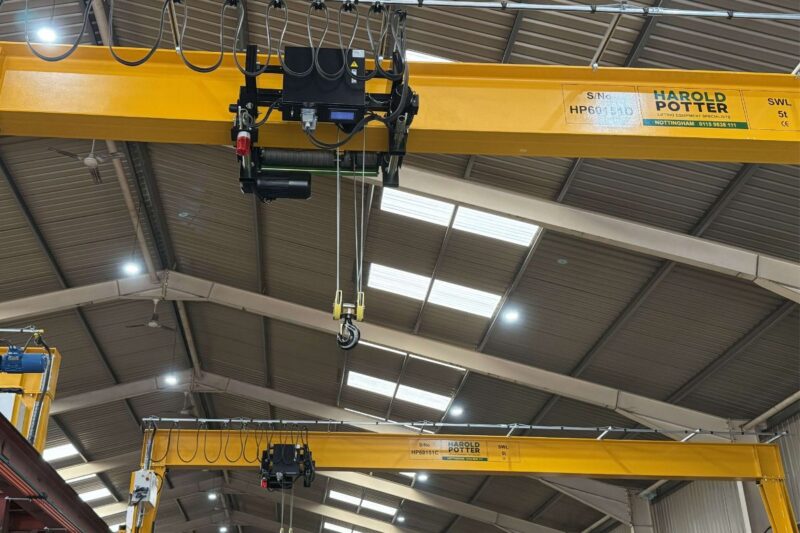
Our engineers service a wide range of lifting equipment, including overhead cranes, gantry cranes, goliath cranes, semi-goliath cranes, and swing jib cranes. Whether your crane was manufactured by Harold Potter or another supplier, we can tailor a servicing schedule to suit your equipment.
Why Choose Harold Potter?
Our Crane Service Contracts are designed to simplify the servicing process for you, while also making it cheaper to service your cranes with competitive prices. Our highly-skilled and experienced engineers have a plethora of experience servicing and repairing cranes across the UK. Theadded benefits such as priority for breakdowns for our customers on contract, ensures your downtime is limited, allowing your operations to return to normal faster. No matter what crane you have or how many you have, we can discuss a crane service contract with you that suits your operations and ensures safety of your operators for years to come.
Frequently Asked Questions
What’s included in a crane service?
A routine crane service typically includes inspecting key mechanical and electrical components, checking safety features, lubricating moving parts where required, identifying signs of wear and providing recommendations for any repairs that may be necessary.
Does crane servicing replace a LOLER Thorough Examination?
No. Crane servicing and LOLER Thorough Examinations are different. Servicing helps maintain the condition and reliability of your crane, while a LOLER Thorough Examination is a legal inspection carried out to assess the safety of lifting equipment.
What happens if you find a fault during servicing?
If our engineers identify any worn or damaged components during servicing, we’ll explain our findings and discuss the available options with you before carrying out any necessary repair. We believe in honest advice and won’t recommend unnecessary repairs or to replace parts that don’t need replacing.
Can you service multiple cranes during the same visit?
Yes. If you operate multiple cranes at the same site, our engineers can service them during a planned visit. This can help reduce disruption to your operations and make ongoing maintenance easier to manage.
Request a Crane Servicing Quote
Regular servicing is one of the simplest ways to improve the reliability and longevity of your lifting equipment. Whether you operate a single crane or manage multiple lifting systems, Harold Potter can provide a servicing solution tailored to your business. Get in touch with our team today to discuss a planned service contract.