
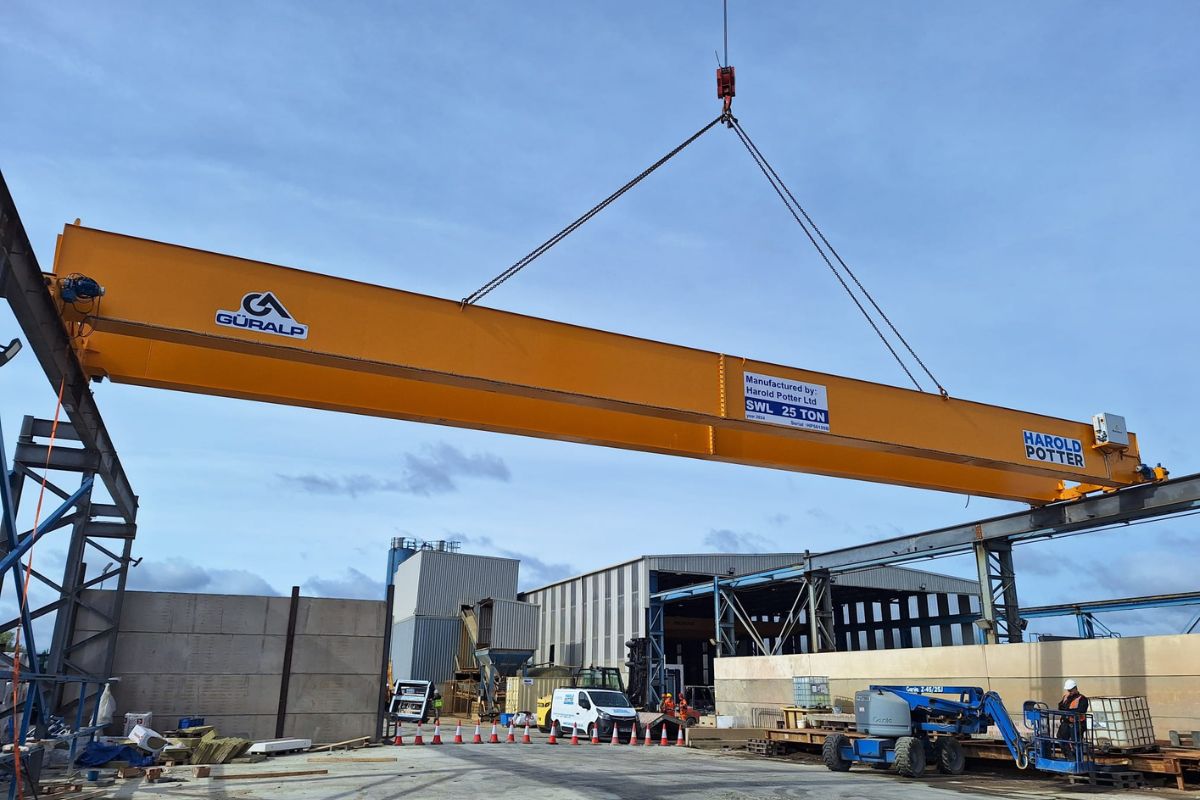
An overhead crane is a type of industrial lifting system used to lift, lower, and move heavy loads horizontally across a workspace. Overhead cranes are commonly installed in factories, workshops, warehouses, and manufacturing facilities where regular heavy lifting is required.
The crane operates on elevated runway beams and uses a hoist and trolley system to transport loads safely and efficiently around the working area.
Overhead cranes are designed to improve lifting safety, reduce manual handling, and increase productivity in industrial environments.
How Does an Overhead Crane Work?
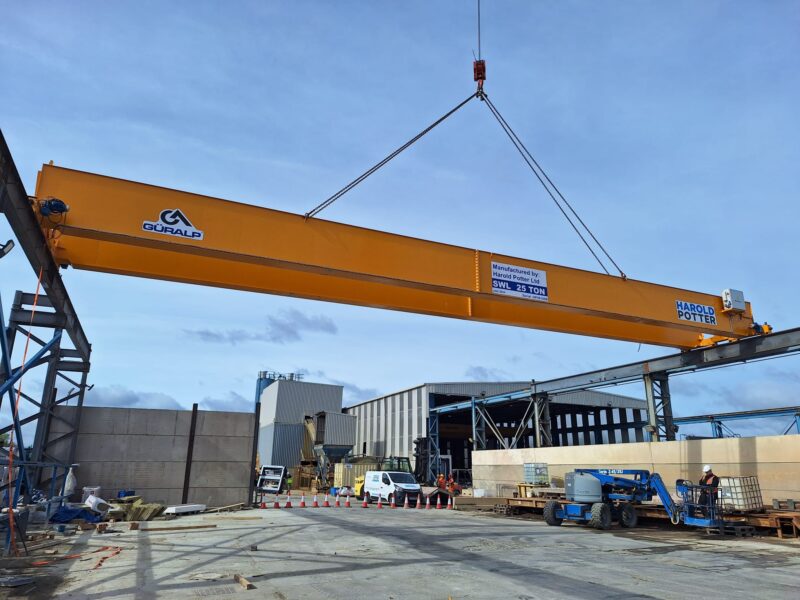
An overhead crane works by moving a hoist along a horizontal bridge beam while the entire crane travels along runway rails.
The hoist lifts and lowers the load vertically using wire rope or chain.
The trolley moves the load side to side across the bridge.
The bridge itself travels along the runway system to move loads across the full working area.
This allows heavy materials to be lifted and transported safely with precise control.
What Are Overhead Cranes Used For?
Overhead cranes are used for lifting and moving heavy or awkward materials that would be difficult or unsafe to handle manually. They are commonly used in the industrial space. Industries such as manufacturing, engineering, workshops, steel industry, construction and other heavy-duty industries.
What Is the Difference Between a Single Girder and Double Girder Overhead Crane?
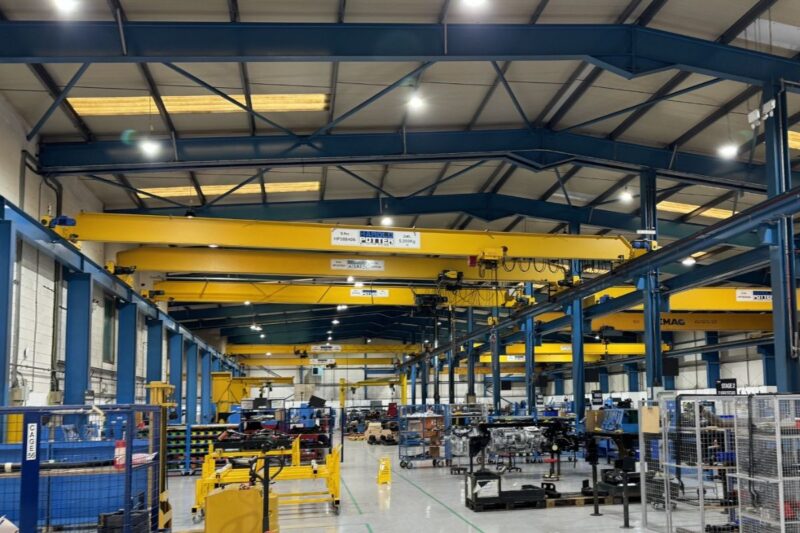
A single girder overhead crane uses one main bridge beam.
A double girder overhead crane uses two bridge beams for increased lifting capacity and higher hook height.
Single girder cranes are usually more cost effective for lighter lifting applications.
Double girder cranes are better suited to heavy-duty industrial lifting and larger spans.
The correct crane type depends on lifting requirements, building layout, and operational usage.
What Is the Safe Working Load of an Overhead Crane?
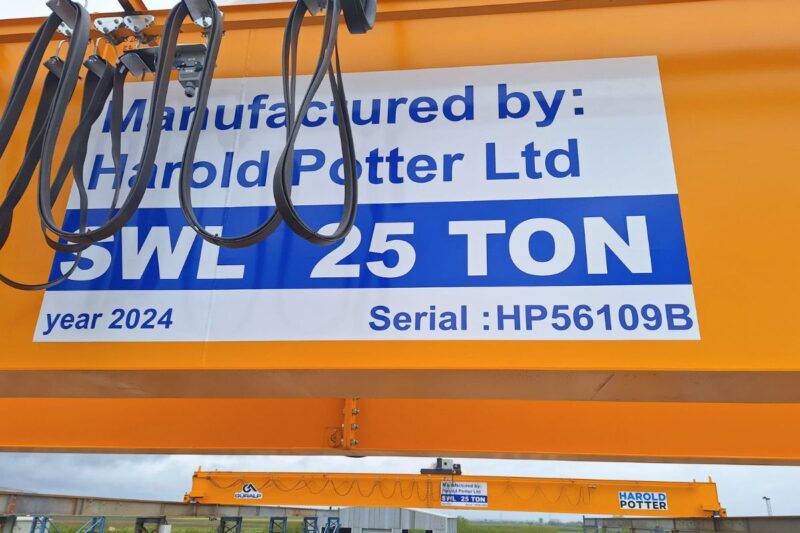
The Safe Working Load (SWL) is the maximum weight the crane can safely lift under normal operating conditions.
The SWL is determined by the manufacturer and must never be exceeded.
Operating above the Safe Working Load can create serious safety risks including structural damage, hoist failure, and dropped loads.
How Often Should Overhead Cranes Be Inspected?
In the UK, overhead cranes must be regularly inspected under LOLER regulations.
Most cranes require a formal inspection every 12 months.
More frequent inspections may be required every 6 months depending on crane usage and lifting conditions.
Routine servicing and preventative maintenance are also important for safe operation and reducing downtime.
What Causes Overhead Crane Failures?
Common causes of overhead crane failure include poor maintenance, worn structure or components, brake problems, electrical faults, and overloading.
Lack of regular inspection is one of the most common causes of crane safety issues.
Preventative maintenance helps identify faults before they become major operational or safety problems.
What Are the Advantages of an Overhead Crane?
Overhead cranes improve lifting efficiency and workplace safety by reducing the need for manual handling and forklift movement.
They also help maximise floor space because the crane operates above ground level.
Overhead cranes can safely move heavy loads with greater precision and control than many alternative lifting methods.
They are commonly used to improve workflow and reduce lifting-related downtime in industrial facilities.
Are Overhead Cranes a Legal Safety Responsibility?
Yes. Businesses operating overhead cranes in the UK must comply with LOLER and other workplace safety regulations.
Cranes must be properly maintained, inspected, and operated within their Safe Working Load limits.
Failure to maintain lifting equipment safely can result in legal liability, operational downtime, and serious safety risks.
Summary
An overhead crane is a lifting system designed to move heavy loads safely and efficiently across industrial workspaces. Overhead cranes are widely used across manufacturing, engineering, warehousing, and heavy industry because they improve lifting safety, increase productivity, and reduce handling risks. Understanding how overhead cranes work, how they are maintained, and how they are safely operated is essential for maintaining safe and efficient lifting operations. Following LOLER and SWL regulations is vital to keeping your operators and workplace safe.