
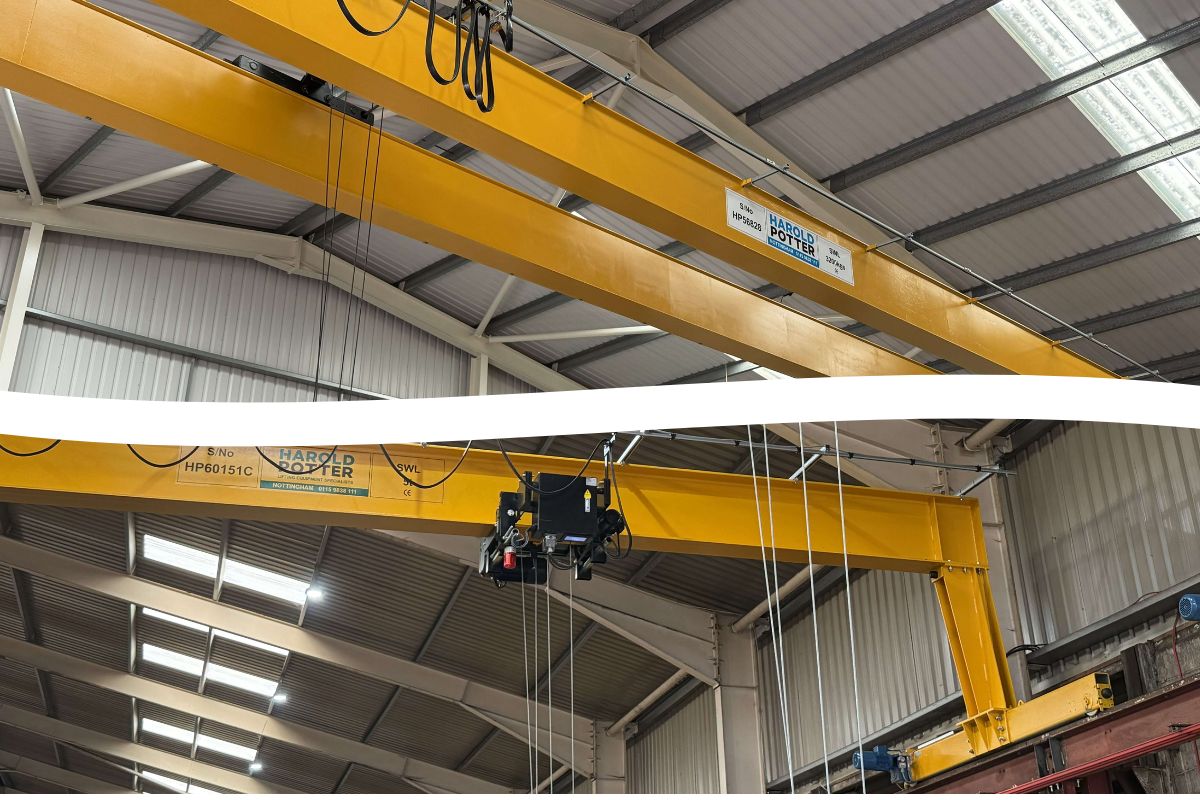
Overhead Cranes and Gantry Cranes are two of the most popular cranes in the industry and although they do a very similar job in terms of heavy industrial lifting, they do have their differences. It’s important to know the difference between an Overhead Crane and a Gantry Crane before choosing one for your operations. In many situations, it might be what you’re lifting, moving, and manufacturing which makes the choice of Overhead or Gantry for you. Your building structure and size will likely also play a part in that decision.
What is an Overhead Crane?
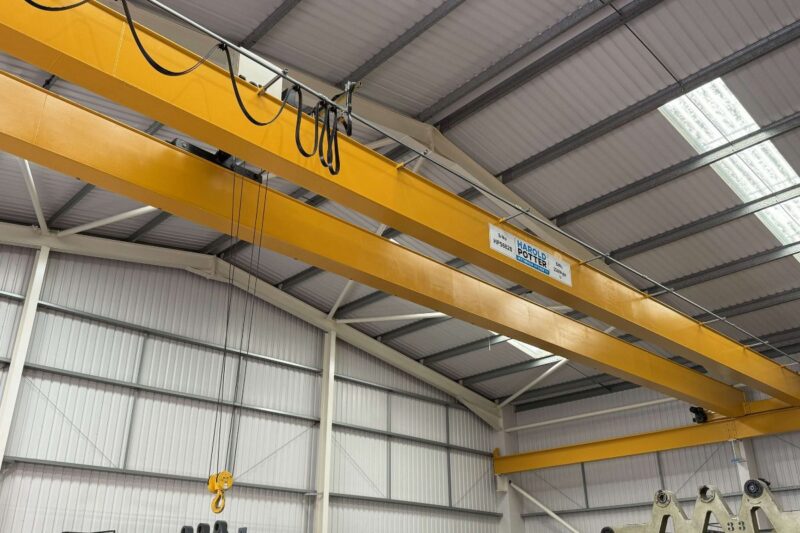
An Overhead Crane is a type of industrial lifting system used to lift, lower, and move heavy loads horizontally across a workspace. Overhead cranes are commonly installed in factories, workshops, warehouses, and manufacturing facilities where regular heavy lifting is required. The crane operates on elevated runway beams and uses a hoist and trolley system to transport loads safely and efficiently around the working area. Overhead cranes are designed to improve lifting safety, reduce manual handling, and increase productivity in industrial environments.
What is a Gantry Crane?
A gantry crane is a type of overhead lifting crane designed to move heavy loads across a working area. Depending on the application, gantry cranes can be fully supported by their own legs running on ground-mounted rails or be designed as overhead gantry cranes that operate on elevated runway beams within a building.
What are the main differences between an Overhead Crane and a Gantry Crane?
Operation
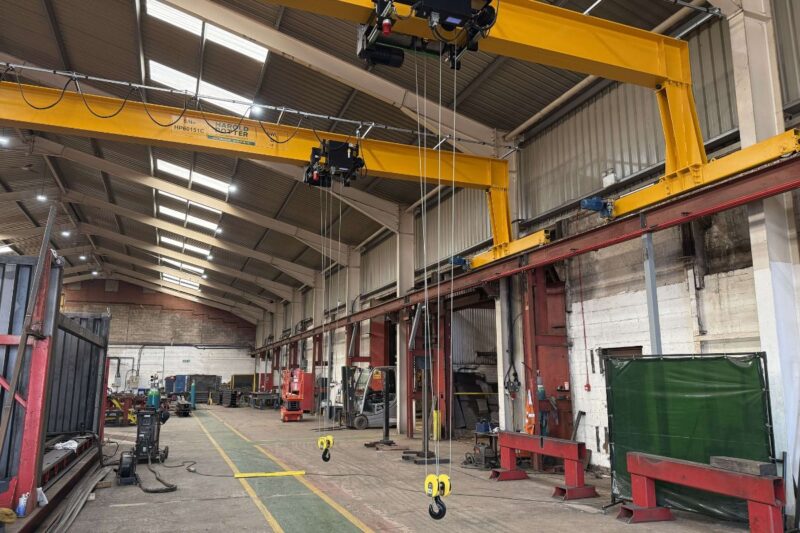
Overhead cranes operate on elevated runway beams inside a building structure. Gantry cranes are often mobile and are self-supported by their own legs and often don’t rely on building structure. However, in some cases, gantry cranes may run on wheels on elevated gantry steelwork and look similar to an overhead crane. The image below shows an example of this where the crane has been stooled up on the gantry steelwork to provide further lifting height.
Mobility and Floor Space
Overhead cranes a permanently fixed to the elevated runway and aren’t mobile. Due to the fact overhead cranes operate on elevated runway beams they leave the floor space free in your workshop. This allows space for other machinery, other cranes that can work in conjunction with overhead cranes such as swing jib cranes, and more space for your engineers/operators. Gantry cranes are more flexible as they can operate on wheels or rails to move to different locations in and around the working area. However, the legs and rails they operate from may prove difficult to work around in some instances, minimising floor space in your working area.
Installation and Environment
Overhead cranes will often require a longer design and installation process to ensure the existing building structure is strong enough to meet the weight of the crane itself, along with the added weight of the crane’s accessories and what it will be lifting. In most cases, at Harold Potter, we design a solution that meets the structural demands, added steelwork may be required. Overhead cranes are primarily designed for solutions that are indoors although they can be provided outdoors.
Gantry cranes on the other hand rarely need as long a process or changes to your building structure as they operate on wheels or rails mounted to the ground. They are self-supporting and handle the weight load of the crane beam, and what it’s lifting through its own legs, which are often designed in an A shape. Gantry cranes are found outdoor more often than overhead cranes due to the reliance of existing structure for overhead cranes.
Gantry cranes are applicable in both indoor and outdoor workplaces, however smaller gantry cranes that are designed for indoor use aren’t the best option for outdoor work. This is due to the added variable of the weather which will impact a crane’s performance and durability. It’s likely for heavy-duty outdoor lifting that standard indoor gantry cranes can’t handle, that a goliath crane will be advised. Goliath cranes are a much larger form of gantry that is specifically engineered to manage factors such as the wind and rain, while maintaining maximum safety.
Lifting Capacity
Overhead cranes on average will typically offer you a greater lifting capacity compared to a gantry crane. However, gantry cranes provide a wider range of lifting capacities if you include huge heavy-duty goliath cranes that can lift up to hundreds of tonnes. Both overhead and gantry cranes provide good lifting capabilities at common weights for businesses from 500kg to 10 tonnes, but overhead cranes are chosen more the heavier lifting in that weight bracket. Some of our recent case studies show examples of overhead cranes being used for 3.2T and 7.5T & 8T lifting.
Cost
The cost of overhead cranes and gantry cranes aren’t set in stone and are dependent on an abundance of factors ranging from the crane itself, the hoist, added steelwork, the span and wheels on the runways, and the foundations of your building. Crane costs are variable, but factors such as higher lifting capacity, single vs double girder and other variables requiring more materials will come with a higher cost.
Overhead vs Gantry Crane Summary
Both overhead and gantry cranes are top choices for businesses throughout the UK. There is no right or wrong on which is better, it just depends on which crane suits your business the best. The main difference between the two are the operation with overhead cranes relying on existing building structure, whereas gantry cranes are free-standing. Other differences are the mobility and floor space, along with the installation process with gantry cranes providing more mobility, overhead cranes providing more floor space and the installation process of an overhead crane is more likely to be longer due to potential of added steelwork to support the crane.
If you require an Overhead Crane or Gantry Crane for your business, contact us today.